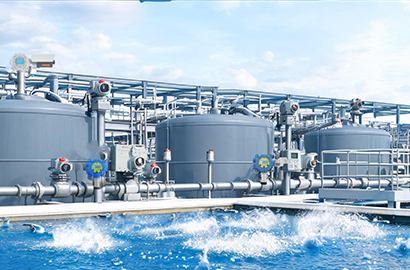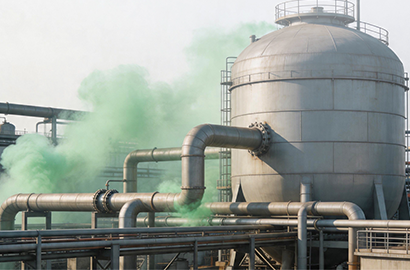












In our cities, billions of tons of urban wastewater flow silently through underground pipe networks every day, entering treatment plants where it undergoes sedimentation, aeration, filtration, and numerous other processes before finally meeting discharge standards or being reclaimed. This process safeguards our urban water environment, yet it conceals a frequently overlooked hazard—toxic and harmful gases that are invisible to the eye and often too quick for the nose to detect.
In recent years, safety accidents caused by gas poisoning and explosions in wastewater treatment facilities and their supporting pipe networks have occurred with alarming frequency. In 2023, maintenance personnel descending into a well at a municipal sewage pumping station were overcome within minutes when hydrogen sulfide levels spiked suddenly, leaving multiple workers unconscious. In 2024, a methane leak reaching dangerous concentrations in a digester area of a treatment plant ignited, resulting in devastating losses. Behind these incidents lies a dangerous lack of awareness about the hazardous gases present in wastewater treatment facilities.
Five Hazardous Gases in Wastewater Treatment Facilities
Wastewater treatment facilities, due to their unique process environments, are high-incidence sites for various toxic and hazardous gases. Understanding the properties and dangers of these gases is the first step in building a safety defense.
1、 Hydrogen Sulfide (H₂S) — The Most Dangerous “Silent Killer”
Hydrogen sulfide is the most threatening gas in wastewater treatment facilities. It is produced when sulfur-containing organic matter in sewage is broken down by microorganisms under anaerobic conditions. It has a characteristic rotten-egg odor, but at high concentrations, it rapidly paralyzes the olfactory nerves, causing poisoning without the victim ever being aware of it.
Hazard Quick Reference: 10 ppm causes eye and nose irritation; 50 ppm leads to dizziness and nausea; 200 ppm can cause pulmonary edema; concentrations above 500 ppm can be fatal within 30 minutes. It is particularly dangerous in confined spaces such as bar screen rooms, sludge thickening tanks, and manholes.
2、Methane (CH₄) — Explosion Risk in Sludge Digesters
Methane is the primary component of biogas, produced in large quantities during the anaerobic digestion of organic matter in wastewater. While methane itself is non-toxic, its explosive range is 5% to 15% by volume. Concentrations exceeding this threshold can trigger deflagration or detonation. Additionally, methane displaces oxygen in large volumes, creating asphyxiation hazards for workers. Digesters, gas holders, and utility corridors are high-risk areas for methane leaks.
3、Ammonia (NH₃) — The Pungent Threat in Biological Treatment Zones
Ammonia originates from the decomposition of nitrogen-containing organic compounds in sewage and from denitrification processes. It is commonly encountered in blower rooms, aeration zones, and dewatering facilities. Ammonia has a strong, pungent odor. At high concentrations, it causes burns to the respiratory mucosa; prolonged exposure to low concentrations may lead to chronic respiratory damage.
4、 Carbon Monoxide (CO) — The Colorless, Odorless Chronic Killer
In wastewater treatment facilities, carbon monoxide is primarily generated by incomplete combustion of biogas (e.g., in biogas boilers and combined heat and power units) and by abnormal operating conditions in anaerobic digesters. CO has 240 times greater affinity for hemoglobin than oxygen. Poisoning often occurs imperceptibly and is easily overlooked.
5、 Oxygen Deficiency (O₂ Depletion) — The “Compound Hazard” of Confined Spaces
In confined spaces such as pipelines, manholes, and sump pits, the accumulation of the aforementioned organic gases and CO₂ can compress oxygen levels below 18%, creating an oxygen-deficient environment. Hypoxia frequently occurs in combination with toxic gas exposure, multiplying the danger.
High-Risk Work Area Distribution
Screening Rooms and Influent Pumping Stations — Where sewage converges, hydrogen sulfide concentrations are highest, and these are mostly semi-enclosed spaces.
Sludge Thickening and Digestion Tank Areas — Where methane and H₂S coexist, posing both explosion and poisoning risks simultaneously.
Underground Utility Tunnels and Manholes — Where natural ventilation is extremely poor, and toxic gases easily accumulate to dangerous concentrations.
Blower Rooms and Aeration Zones — Where ammonia concentrations are relatively high, and loud noise masks odor warnings.
Sewage Associated Pipe Networks — Where pipes are narrow, numerous, and widely distributed, with frequent personnel inspections creating high demand for portable gas detection.
Nuoan Technology: Guarding Every Breath
Shenzhen Nuoan Technology Co., Ltd. (hereinafter referred to as ” Nuoan Technology”), established in 1999, is a leading enterprise in China’s gas detection sector. The company specializes in the R&D, manufacturing, and provision of systematic gas solutions for toxic, combustible gas, and volatile organic compound (VOC) detection and analysis equipment. Nuoan Technology currently holds over 220 core intellectual property rights and has participated in the drafting of more than 10 national and local standards. It is also recognized as one of Shenzhen’s renowned brands.
Nuoan Technology’s product portfolio covers more than 200 varieties across series including gas sensors, point-type gas detectors, portable gas detectors, gas alarm control panels, VOC online monitoring systems, and analyzers. Core products have obtained industry certifications such as explosion-proof certification (Ex IIB T6 / Ex II C T6), CCC certification, SIL functional safety certification, and IECEx international certification, meeting the stringent safety and reliability requirements of the wastewater treatment industry.
Product Recommendations for Wastewater Treatment Applications
Tailored to the characteristics of wastewater treatment facilities, Nuoan Technology provides a full-chain gas solution ranging from fixed monitoring to portable inspection:
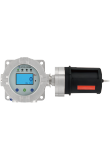
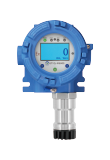
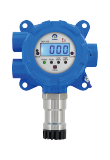
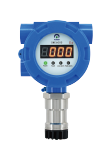
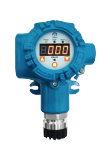
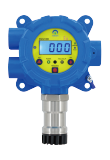
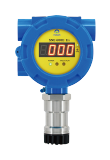
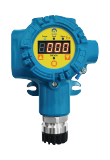
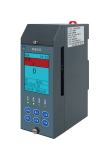
SNE4100B Toxic Gas Detector
Fixed Installation | Explosion-Proof Design | Plug-and-Play Sensor
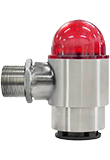
Suitable for continuous monitoring of toxic gases such as hydrogen sulfide, ammonia, and carbon monoxide in fixed areas including screening rooms, pump stations, and utility tunnels. Features a plug-and-play intelligent sensor module enabling on-site maintenance without specialized tools; supports infrared remote control / magnetic wand calibration without opening the enclosure, significantly reducing operation and maintenance costs. Explosion-proof rating meets Ex IIB T6, suitable for hazardous locations with explosive gas mixtures.
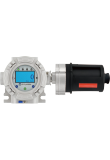
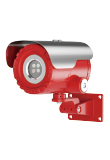
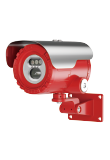
GTYQ-IR500 Infrared Combustible Gas Detector
Infrared Principle | Poisoning-Resistant & Water-Vapor Interference-Immune | Rapid ResponseSuitable for methane (CH₄) detection in digestion tanks, gas holders, and biogas utilization facilities. Utilizes NDIR (Non-Dispersive Infrared) absorption technology, immune to “poisoning” effects from toxic gases such as hydrogen sulfide, with advantages including long service life, minimal zero drift, and fast response. The long-path gas chamber design ensures high precision, making it ideal for harsh environments with frequent biogas concentration fluctuations.
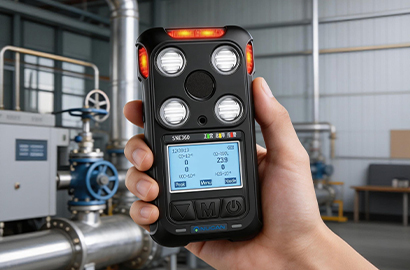
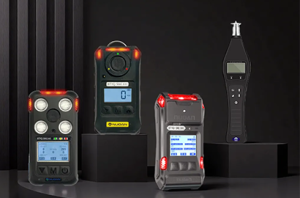
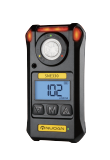
SNE380 Portable Multi-Gas Detector
1-6 Gases | Essential for Inspection Rounds | IP67 Waterproof
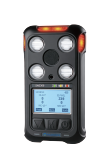
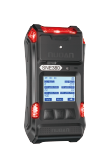
Suitable for routine inspection of sewage pipe networks and manhole entry operations. Capable of simultaneously detecting H₂S, CO, CH₄ (LEL), and O₂, meeting regulatory requirements for “detect first, enter later” in confined space operations. IP67-rated for water and dust resistance, withstanding humid conditions at wastewater treatment sites; built-in vibration alarm ensures reliable hazard alerts even in noisy environments.
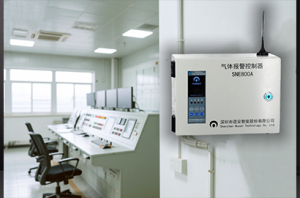
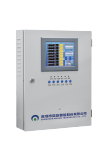
SNE808 Gas Alarm Control Panel
Multi-Channel Centralized Monitoring | Linked Control | Remote Transmission
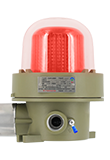
Suitable for centralized gas alarm management platforms in wastewater treatment plant control rooms. Features a modular structure with I/O modules expandable on demand, capable of connecting to detectors across all plant areas; wide-screen LCD centrally displays real-time concentration values for each channel; built-in relay linked outputs enable direct control of interlocked equipment such as emergency ventilation fans and audible/visual alarms; supports RS-485 communication protocol for seamless integration with SCADA/DCS systems.
System Integration Solution — From Detection to Linked Early Warning Closed Loop
Nuoan Technology not only provides standalone detection equipment but also offers comprehensive GDS (Gas Detection System) solutions for the wastewater treatment industry, enabling a closed-loop, full-process gas safety management system.
Distributed Detectors → SNE808 Controller → Audible/Visual Alarm Linkage → Forced Ventilation Activation → SCADA Remote Push
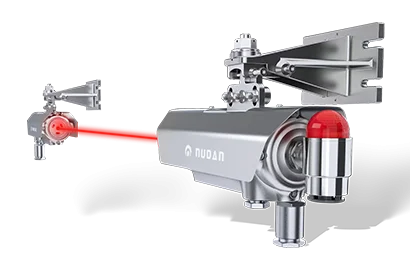
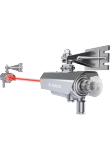
The system supports IoT integration for industrial environment gas detection, allowing management personnel to view real-time gas concentration trend charts across all plant areas via PC or mobile terminals, with historical data automatically archived to meet recording and documentation requirements under standards such as GB/T 50493. For large-scale wastewater treatment plants, a zoned management architecture can also be deployed, combined with the XT-TDLScan200 laser line-type detector to achieve comprehensive, dead-zone-free coverage of large open spaces.
For urban associated pipe networks, Nuoan Technology recommends combining portable instruments with wireless gas detectors to build a “human-machine collaborative” pipeline safety inspection system, maintaining real-time vigilance even during unmanned inspection periods.
Application Cases
Case 1: A Provincial Capital City’s No. 3 Wastewater Treatment Plant
With a daily treatment capacity of 150,000 tons, this plant faced persistent methane leakage risks in its digestion tank area. The original catalytic combustion detectors frequently failed due to hydrogen sulfide poisoning, requiring quarterly sensor replacements and resulting in prohibitively high operation and maintenance costs. After introducing Nuoan Technology infrared detectors, the inherent advantage of infrared technology—natural immunity to hydrogen sulfide “poisoning”—extended sensor service life from an average of 8 months to over 3 years, reduced annual O&M expenses by approximately 65%, and shortened response time to T90 ≤ 30 seconds, significantly elevating the intrinsic safety level of the digestion tank area.
Case 2: A Municipal Underground Pipe Network Renovation Project
A city implemented stormwater and sewage separation upgrades, constructing over 300 kilometers of new underground sewage pipelines involving more than 8,000 manholes. The project team selected Nuoan Technology portable multi-gas detectors as standard inspection equipment and installed point-type wireless detectors at critical trunk pipeline nodes, with data integrated into a smart pipeline management platform. The system provided early warnings for abnormal gas exceedance events, enabling ventilation measures to be completed before personnel entry, achieving a “zero-accident” safety goal for this batch of newly constructed pipelines.
Shenzhen Nuoan Technology Co., Ltd. — For 28 years, steadfastly safeguarding life and safety through technology.