

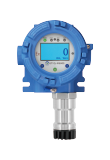


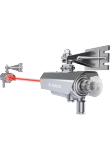
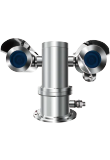
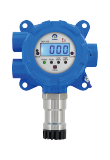
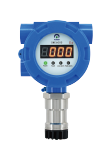
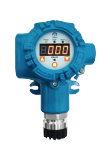
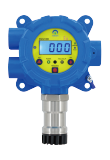
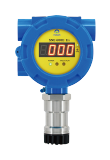
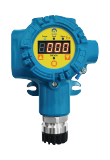


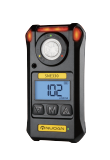
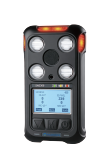
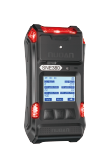
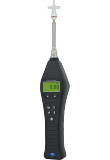

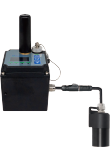


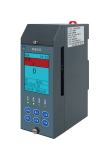
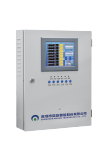


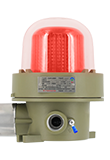
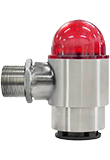

In industrial environments such as petrochemical, natural gas, metallurgy, and pharmaceutical facilities where hazardous gases are omnipresent, gas detection instruments serve not merely as “detection tools,” but as the ultimate safeguard protecting on-site personnel from life-threatening risks.
As China’s intelligent manufacturing accelerates its global expansion, product quality and regulatory compliance have become the most critical credentials for industrial safety equipment—including gas detection instruments and meters—to access European, Middle Eastern, and global markets. Only by obtaining rigorous certification and the relevant “safety passports” from authoritative bodies can manufacturers take their first step into the international marketplace. ATEX and IECEx stand as the two most significant international certification systems in this domain.
01 Overview of International Certifications for Gas Detection Equipment
International certification for gas detection equipment is a process whereby authoritative bodies assess and validate the safety of products for use in explosive atmospheres. In industrial settings, an uncertified detection instrument could itself become an “ignition source” due to electrical sparks, leading to irreversible catastrophic consequences.
Currently, the mainstream international certification systems applicable to global gas detection equipment include:
ATEX— EU Directive on Equipment for Explosive Atmospheres (Mandatory)
– IECEx — International Electrotechnical Commission System for Certification to Standards Relating to Equipment for Use in Explosive Atmospheres
– SIL — Safety Integrity Level Certification
– UL / FM — U.S. Explosion Protection Safety Certifications
– EAC — Eurasian Conformity Certification (Russia / Central Asia)
– CCC / Explosion Protection Certificate** — Mandatory Certification for the Chinese Domestic Market
Among these, ATEX and IECEx are the two certifications most frequently referenced by global industrial clients—and the most commonly confused.
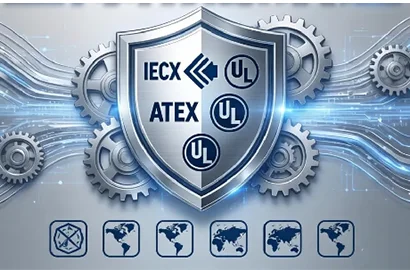
02 ATEX vs IECEx: Fundamental Differences
Distinct Legal Status: One is a “Regulation,” the Other a “Standards System”
ATEX is established under EU Directive 2014/34/EU and constitutes a mandatory regulatory requirement. Any explosion-protected equipment sold within the European Union—regardless of the manufacturer’s country of origin—must hold ATEX certification. This is a legal imperative and non-negotiable.
IECEx is a voluntary international certification system led by the International Electrotechnical Commission (IEC), based on the IEC 60079 series of standards. It is recognized by over 50 countries and regions worldwide.
In a nutshell: ATEX represents the statutory threshold for market access into the European Union; IECEx serves as the universal passport for the global marketplace. The two systems serve distinct objectives and are not mutually interchangeable.
Divergent Marking Requirements
Products certified under ATEX must bear both the CE marking and the hexagonal Ex symbol, accompanied by equipment classification, protection level, temperature class, and other relevant parameters.
Products certified under IECEx must display the IECEx circular logo, together with the certificate number, certifying body, and explosion protection parameters—ensuring universal recognition worldwide.
Certification Rigor: IECEx Offers Greater Comprehensiveness
The IECEx certification encompasses three critical dimensions: Equipment Certification (product type testing), Quality Assurance Report (factory quality management system audit), and Personnel Certification (professional competency certification). An IECEx certificate signifies not merely “product conformity,” but rather “manufacturing system integrity.”
03 Nuoan : Strategic Global Market Expansion with Multiple International Certifications
Shenzhen Nuoan Technology Co., Ltd has been dedicated to the gas detection industry for over two decades. As one of the few professional manufacturers in China holding multiple mainstream international certifications concurrently, the company has established comprehensive product coverage across the following certification systems:
| Certification | Applicable Market | Description |
| ATEX | European Union Market | Compliant with Directive 2014/34/EU; qualifies for European market entry |
| IECEx | 50+ Countries Worldwide | Based on IEC 60079 series; internationally recognized for explosion protection across borders |
| SIL | Process Safety Systems | Safety Integrity Level; applicable to functional safety scenarios |
| EAC | Russia / Central Asia | Market access for the Eurasian Economic Union |
| CE-EMC | European Union | Electromagnetic Compatibility certification |
| HART | Industrial Automation | Smart instrumentation HART communication protocol certification |
| CCC / Explosion Protection Certificate | China Domestic Market | Mandatory compliance for the domestic market |