



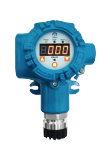
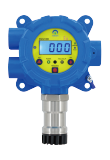
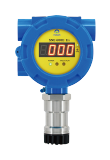
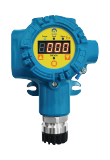



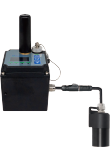


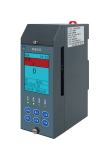
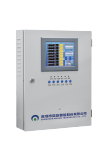
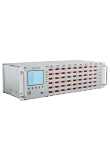

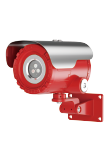
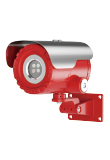
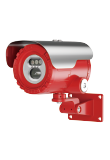

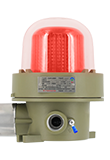

At a smelting blast furnace, carbon monoxide concentrations fluctuate several times per second. In a semiconductor fabrication cleanroom, trace silane leakage can trigger millions in equipment damage. Inside a chemical reactor, even a slight imbalance in the hydrogen-to-oxygen ratio can ignite catastrophe. In modern industrial production, the precision and response speed of gas detection have become the “lifeline” of safe operations.
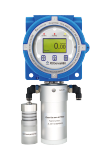
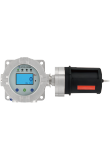
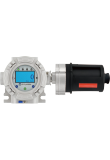
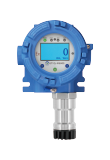
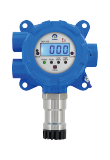
The NAS-IR500 Dual-Optical-Path Long-Path Infrared Gas Sensor redefines industrial gas detection standards through three core technologies: dual-optical-path detection, long-path design, and intelligent algorithm optimization.
Dual-Optical-Path Detection: From “Passive Correction” to “Active Immunity”
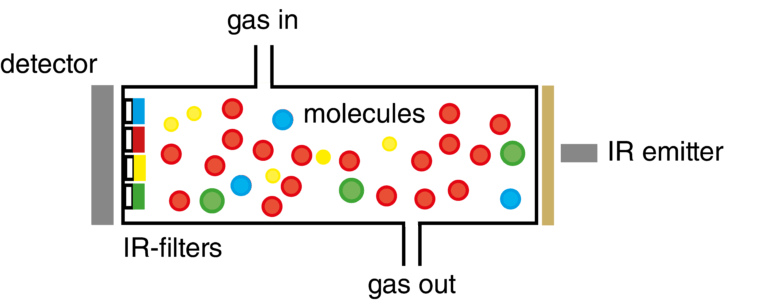
NDIR (Non-Dispersive Infrared) technology determines gas concentration by measuring the absorption of infrared radiation at specific wavelengths. An infrared beam passes through the sampling chamber, where target gas molecules absorb radiation at characteristic frequencies; the system quantifies gas concentration by measuring this absorption.
Immunity to Industrial Interference
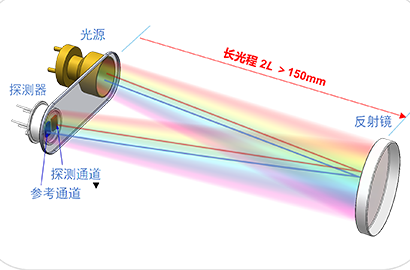
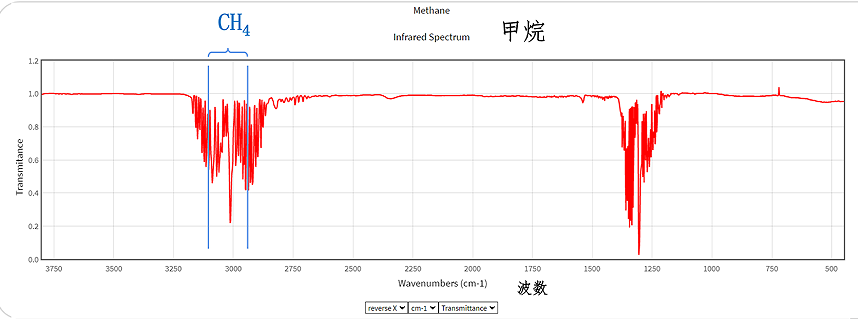
Optical sensors rely on light sources for detection, yet real-world industrial environments are rife with interference—dust, moisture, and particulate matter. Single-optical-path sensors are particularly vulnerable to these conditions, suffering from power attenuation and scattering losses that lead to measurement drift and accuracy degradation. The NAS-IR500 addresses this with a dual-channel architecture comprising both a detection path and a reference path. While the detection path focuses on measuring gas concentration, the reference path continuously monitors the impact of environmental disturbances on the optical signal. When ambient conditions shift, the sensor automatically cross-references data from both channels to compensate for interference in real time, ensuring consistently reliable readings with measurement error reduced to ±3% LEL. In underground mining operations, for instance, where airborne dust and high humidity are constant challenges, this dual-path design effectively suppresses environmental noise to deliver accurate detection of combustible gases such as methane.
Long-Path Gas Cell: High-Sensitivity Detection in a Compact Footprint
The NAS-IR500 features a long-path gas cell exceeding 15 cm—a distinctive design that dramatically enhances both detection precision and sensitivity. The extended optical path allows for more complete interaction between gas molecules and infrared radiation, enabling the sensor to capture even minute changes in gas concentration with exceptional fidelity. Grounded in the Beer-Lambert Law, which establishes a direct relationship between infrared absorption at specific wavelengths and gas concentration, the long-path design increases the propagation distance of light within the cell, thereby amplifying absorption signals and providing a robust foundation for high-precision measurement—achieving an accuracy of ±2% LEL.
Optimized Algorithms and Intelligent Capabilities: From “Data Collection” to “Risk Prediction”
Intelligence Beyond Detection
In industrial settings, gas concentration fluctuations often coincide with shifts in process parameters. The NAS-IR500 integrates a multi-parameter fusion algorithm that continuously collects gas concentration, ambient temperature, and humidity data in real time. Through intelligent processing, it constructs dynamic correction curves that significantly enhance environmental adaptability. Key intelligent functions include:
Smart Temperature Control: Automatically activates heating to eliminate moisture and prevent condensation or ice formation on the cell windows and mirrors—conditions that would otherwise compromise detection accuracy. This ensures reliable operation even in low-temperature, high-humidity environments.
Temperature Compensation: Maintains stable, accurate performance across an extreme temperature range of -40°C to +70°C, effectively neutralizing thermal drift in measurement results.
Intelligent Auto-Zero Calibration: Automatically performs zero-point calibration when predefined threshold conditions are met, minimizing manual maintenance requirements.
Optical Path Self-Diagnostics & Alerts: Promptly issues alarms when optical path contamination or other anomalies are detected, alerting operators to perform cleaning and maintenance—thereby improving serviceability and long-term operational stability.
Illuminating Industrial Safety Through Technology
As intelligent manufacturing converges with dual-carbon goals, gas detection has evolved far beyond simple data acquisition—it has become a critical nexus connecting safety, efficiency, and sustainability. From the blazing furnaces of steel mills to the microscopic precision of semiconductor wafer fabrication, from deep within pipelines to the heart of chemical reactors, the technological revolution driven by infrared spectroscopy is injecting a powerful measure of certainty into global industrial safety and the green transition.