



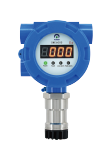
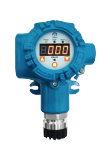
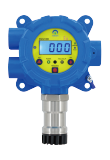
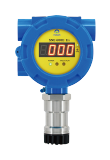








In chemical plants, confined spaces, gas distribution networks, and underground mines… gas detectors are virtually everywhere. But have you ever noticed that even though they all measure “gas concentration,” the display on your instrument often shows four completely different units: %LEL, %VOL, μmol/mol, and mg/m³?
These units represent entirely different concepts. Misreading just one unit can lead to a false assessment of safety levels at best — or a missed emergency response at worst.
Today, NOVAN Technology breaks down each of these four units for you: what they mean, how they differ, how to convert between them, and which scenarios each applies to.
| Unit | Type | Core Meaning | Typical Application |
| %VOL | Volume Concentration | Percentage of gas volume in the gas mixture | Oxygen levels, high-concentration gases |
| μmol/mol | Volume Concentration (Trace) | One part per million by volume | Trace toxic gas detection |
| %LEL | Explosion Hazard Level | Current concentration as a percentage of the Lower Explosive Limit | Combustible gas explosion prevention and early warning |
| mg/m³ | Mass Concentration | Milligrams of gas per cubic meter of air | Environmental monitoring, occupational hygiene |
01 The Most Basic Gas Unit: %VOL
%VOL is the most intuitive unit—it represents volume percentage.
It indicates: in 100 volume units of mixed gas, how many volume units the target gas occupies.
Formula:%VOL = (Volume of target gas ÷ Total volume of mixed gas) × 100%
For example: oxygen in air accounts for approximately 20.9%VOL, nitrogen about 78%VOL, and carbon dioxide only about 0.04%VOL.
%VOL is suitable for describing high-concentration gases, such as pure gases, welding shielding gases, fermentation gases, and flue gases. For instance, whether the oxygen level in a sealed compartment is within the normal range (19.5%–23.5%VOL), or the purity of pure gas in a cylinder. However, when concentrations are extremely low, %VOL becomes impractical. For example, carbon monoxide at 0.000050% in air is awkward to express—this is where μmol/mol comes in.
02 Precise Expression of Trace Concentrations: μmol/mol
μmol/mol stands for micromoles per mole. mol/mol is a ratio of mole fractions; as a gas unit, it represents the ratio of “the number of molecules of the target gas” to “the total number of molecules in the mixed gas.” The prefix “micro” is an SI prefix representing one-millionth. Its relationship with %VOL is straightforward:
– 1 %VOL = 10,000 μmol/mol
– 1 μmol/mol = 0.0001 %VOL
It is still a volume ratio, just at a different magnitude. Simply put, μmol/mol represents a volume concentration of “one part per million,” making it ideal for expressing extremely low concentrations of toxic and hazardous gases, VOCs, ozone, trace components in flue gas, indoor air quality, and trace analysis. The values are far more intuitive.
Important Reminder: μmol/mol **must not** be replaced by ppm! It is common in the industry to incorrectly use ppm (parts per million) to express mole fractions of gases. While ppm does mean one part per million, it lacks specific quantitative meaning. Although numerically equivalent to μmol/mol, ppm is **not** listed in the *Catalogue of Legal Units of Measurement of the People’s Republic of China*, and its use is therefore prohibited by law.
03 The Dedicated Unit for Measuring Explosion Risk: %LEL
This is the most frequently misunderstood of the four units. LEL (Lower Explosive Limit) is the percentage of the lower explosive limit. Every combustible gas has a specific LEL; below this concentration, it will not ignite; at or above it, an explosion may occur upon encountering an ignition source.
For safety purposes, gas detectors use %LEL to indicate the level of danger:
– 0%LEL: No hazard
– 100%LEL: Exactly at the lower explosive limit
– >100%LEL:Entering the explosive range—extremely dangerous
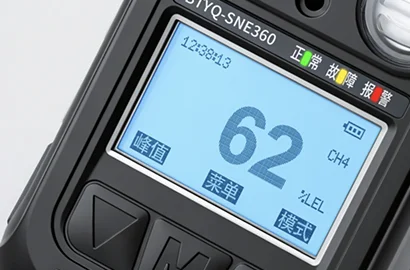
%LEL measures: the percentage of the current combustible gas concentration relative to its lower explosive limit concentration. It is not the true volume of the gas.
Formula: %LEL = (Current gas concentration [%VOL] ÷ LEL of that gas [%VOL]) × 100%
Lower Explosive Limits of Common Gases
Using methane as an example (LEL = 5.0%VOL):
– Reading of 10%LEL → Actual concentration = 5.0% × 10% = 0.5%VOL**, low risk
– Reading of 50%LEL → Actual concentration = 2.5%VOL, immediate alert and evacuation required
– Reading of 100%LEL → Actual concentration = 5.0%VOL, critical explosion threshold reached—extremely dangerous!
Important Reminder: %LEL cannot be used interchangeably across different gases! The same 50%LEL reading corresponds to 2.5%VOL for methane, but only 1.05%VOL for propane—a difference in absolute concentration of more than double. Gas detectors are calibrated for specific gases at the factory. Before use, always verify that the instrument’s calibration gas matches the gas present on site.
04 The Legal Unit for Environmental Monitoring: mg/m³
The first three units are all volume concentrations (the proportion of space occupied by gas molecules). mg/m³, however, is a mass concentration— it expresses how many milligrams of gas or particulate matter are contained in every cubic meter of air.
This unit is virtually mandatory in the following scenarios:
– Industrial emission standards (Integrated Emission Standard of Air PollutantsGB 16297)
– Occupational exposure limits (GBZ 2.1 Occupational Exposure Limits for Hazardous Factors in the Workplace)
– Ambient air quality monitoring (results for PM₂.₅, SO₂, and NOₓ are all expressed in mg/m³ or μg/m³)
Conversion formula between mg/m³ and μmol/mol:
Simplified formula at standard conditions (0°C, 101325 Pa):
> mg/m³ ≈ μmol/mol × M ÷ 22.4
> (M = molecular weight of the gas)
Complete formula requires correction for temperature T (°C) and pressure P (Pa).
Example: 100 μmol/mol of CO₂ (molecular weight = 44):
> mg/m³ = 100 × 44 ÷ 22.4 ≈ 196 mg/m³
Note: The mg/m³ value changes with temperature and pressure. Environmental monitoring results must specify the reference state (e.g., standard state at 0°C or actual state at 25°C). Always ensure consistent conditions when comparing data.
05 How to Choose the Right Unit in Practice
| Detection Purpose | Recommended Unit | Rationale |
| Flammable gas leak detection & explosion prevention (natural gas, LPG, methane, ethane, propane, hydrogen, gasoline vapor, etc.) | %LEL | Directly reflects explosion risk level; alarm thresholds are clear-cut. Used for explosion protection, fire prevention, and leak warning. |
| Toxic gas occupational exposure assessment | μmol/mol | Aligns with occupational hygiene limits (TWA/STEL). |
| Oxygen content detection | %VOL | Oxygen levels are percentage-scale; ppm is not applicable. |
| Environmental emission monitoring (dust, SO₂, NOₓ, TVOC, odor, etc.); Occupational hygiene (toxic vapors, heavy metals, chemical mists) | mg/m³ | Maintains consistency with national emission standards. |
| Gas purity / high-concentration analysis | %VOL | For large-proportion gases, volume percentage is the most intuitive. |
Four Units, Four Perspectives
%LEL — Asks: “How close are we to danger?”
%VOL — Asks: “How much space does this gas occupy?”
μmol/mol — Asks: “How many molecules are mixed in the air?”
mg/m³— Asks: “How many grams of pollutant have been added to the air?”
Safety is no small matter. It starts with understanding every number.
Sales Hotline:+86-755-26826466
To learn more about gas detection products and solutions, please contact us.