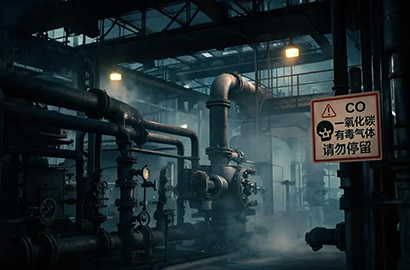












When people hear “carbon monoxide” (CO), many immediately think of “coal gas poisoning.” Yet in industrial settings such as steelmaking, chemicals, metallurgy, and municipal gas systems, CO has long been the “invisible killer” lying in wait. It is colorless and odorless; once inhaled, it binds with hemoglobin in the blood, causing suffocation and even death without warning. At the same time, CO is also combustible—it burns when ignited in oxygen and can even explode at high concentrations. In confined-space operations, gas poisoning and asphyxiation incidents consistently rank among the leading causes of workplace accidents in the industrial and trade sectors. So how do we build a solid “lifeline” of defense? The industrial carbon monoxide gas detection alarm is a critical component in that effort.
Industrial Carbon Monoxide Gas Detectors
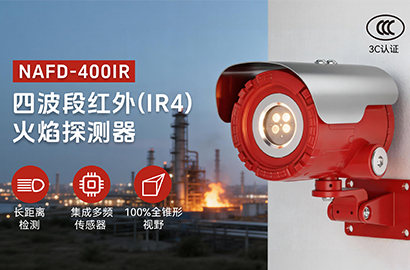
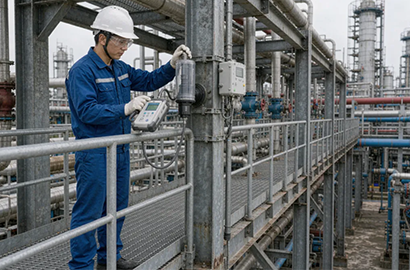
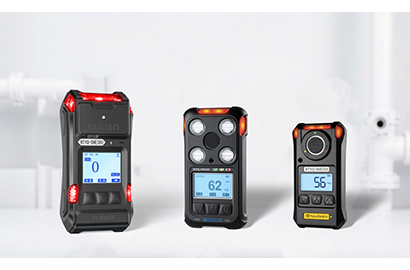
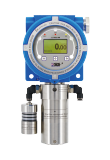
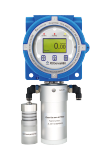
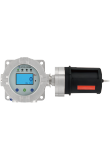
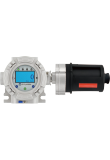
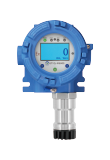
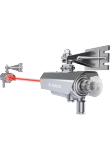
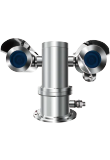
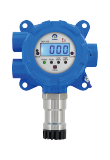
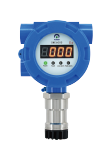
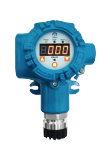
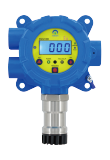
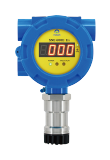
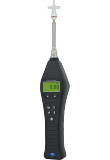
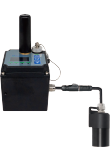
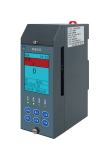
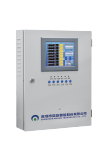
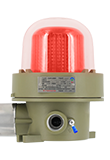
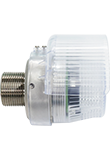
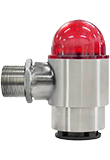
An industrial carbon monoxide gas detector is a safety instrument that continuously converts the CO concentration in ambient air into an electrical signal and triggers audible and visual alarms when preset thresholds are exceeded. It is a core category within toxic gas detectors. Typically comprising three main components—a sensor, signal processing circuitry, and an alarm unit—these devices are widely deployed in petrochemical plants, steel and metallurgical facilities, municipal gas systems, chemical and pharmaceutical operations, and other settings where CO leakage poses a risk. Based on form factor, they fall into two primary categories: fixed units (for online monitoring and continuous standby) and portable units (for patrol inspections and confined-space operations).
How to choose among the four CO detection principles
Recommendation: Electrochemical detection is currently the primary method of choice.
| Technical Principle | Reaction Mechanism | Advantages | Suitable Applications |
| Electrochemical | CO undergoes a redox reaction at the electrode; current output is proportional to gas concentration. | High sensitivity, low power consumption, cost-effective. | Portable detection, industrial safety alarms. |
| Infrared (NDIR) | CO selectively absorbs infrared light; concentration is calculated using the Beer-Lambert law. | High accuracy, long service life, strong resistance to interference. | Online monitoring, environmental emission compliance. |
| Catalytic Combustion | CO undergoes flameless combustion on the catalytic element surface, causing a change in electrical resistance. | Fast response, good stability. | High-concentration applications / explosion risk assessment. |
| Semiconductor | CO adsorption causes a change in the resistance of the metal oxide material | Low cost, compact size | Civilian use / low-cost applications. |
Key Points for Detector Selection and Installation
According to the Standard for Design of Combustible Gas and Toxic Gas Detection and Alarm Systems for Petrochemical Industry (GB/T 50493-2019), carbon monoxide (CO) is classified as a toxic gas and therefore requires a dedicated Toxic Gas Detection System (GDS) with two-level alarm capability. Based on guidance from various emergency management authorities, the recommended alarm setpoints for CO are approximately 17 ppm for the first-level (low) alarm and 34 ppm for the second-level (high) alarm, with a standard measurement range of 0–50 ppm.
In terms of installation, since CO molecules are slightly lighter than air, detectors should be positioned in close proximity to potential release sources, typically at a height of 1.5 to 2 meters above ground level, or alternatively 0.3 to 0.6 meters below the ceiling, while also taking into account the potential for accumulation at elevated points. In hazardous (classified) areas, detectors must be selected from products that have obtained both an explosion-proof certificate (e.g., Ex d IIC T6) and a Pattern Approval Certificate for Measuring Instruments.
Steel & Metallurgy: High CO concentrations around blast furnaces and coke ovens – fixed detectors combined with area audible and visual alarms.
City Gas / LNG: Confined spaces such as valve pits and pipe trenches – portable patrol detectors paired with wireless transmitters.
Chemical & Pharmaceutical: Reactors and tank farms – multi-point GDS networked monitoring.
Emergency Rescue: Confined-space operations strictly follow the principle of “test first, then enter.”
Nuoan Technology Product Recommendations
Fixed Detectors:
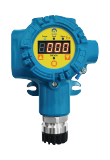
SNE4100B – Point-type toxic gas / oxygen detector
SNE600 Series – Features auto-zeroing and extended service life
Supports 4–20 mA / RS485 output; fully explosion-proof certified.
Portable Detectors:
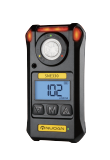
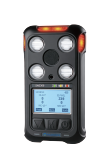
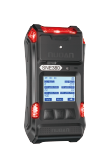
SNE360 / SNE380 – Multi-gas detectors (configurable with electrochemical / infrared sensors; built-in pump for confined-space penetration)
Equipped with 90 dB audible, visual, and vibration triple alarms and IP66 ingress protection rating.
The product has obtained multiple certifications, including explosion-proof certification, metrological approval (CPA), SIL 2, and IECEx.
Frequently Asked Questions (FAQ)
Q: What is the service life of an industrial carbon monoxide detector?
A: The core component of a CO detector is the electrochemical sensor, which has a defined service life of typically 2–3 years.
Q: Is carbon monoxide lighter or heavier than air?
A: Slightly lighter than air (molecular weight of CO is 28, compared to approximately 29 for air). Installation should therefore take into account the potential for accumulation at high points.
Q: What should the alarm setpoints be for an industrial CO detector?
A: The first-level alarm is typically set at approximately 17 ppm, and the second-level at approximately 34 ppm. Specific values should be determined in accordance with GB/T 50493-2019 and applicable local regulations.