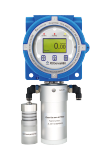


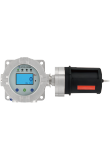
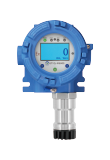


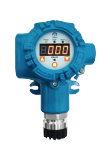
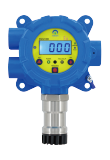
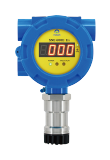
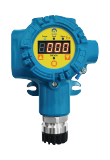


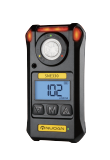
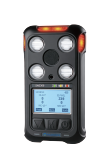
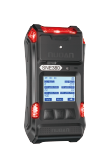
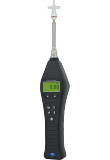

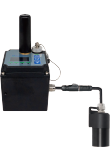


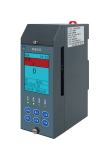
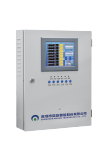
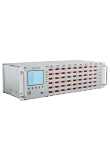


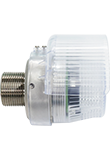
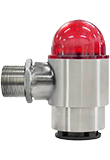

In petrochemical, mining, chemical, and manufacturing industries, gas detectors play a critical role in continuously monitoring combustible and toxic gases as well as oxygen concentrations, serving as an indispensable component of industrial safety systems. Before a gas detector can be deployed in the field, it must go through a series of rigorous stages—from sensing element fabrication and circuit integration to final assembly, calibration, and factory testing.
The manufacturing of gas detectors is a multidisciplinary engineering endeavor that draws on materials science, chemistry, electronic engineering, precision machining, and chemical analysis. In this article, Noah Intelligence takes you through the key technical stages—from core components to final factory delivery—behind the making of a gas detector.
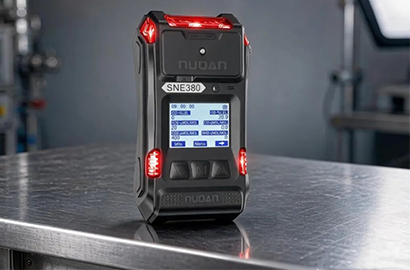
Gas Detector Architecture
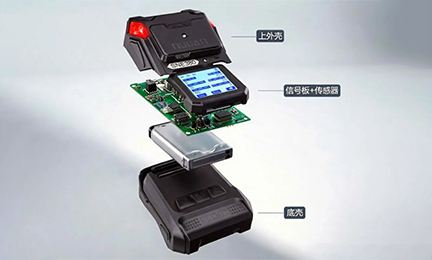
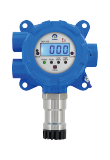
Structurally, a gas detector typically consists of three functional modules: a gas sensing unit, a signal processing and transmission unit, and an enclosure that provides overall protection.
The sensing unit converts the concentration of the target gas into a measurable electrical signal. The signal processing unit handles signal amplification, analog-to-digital conversion, temperature and humidity compensation, algorithm-based recognition, and data communication. The enclosure provides mechanical protection, electrical isolation, and dust and water resistance—ultimately determining whether the device can operate reliably in flammable, explosive, or harsh industrial environments.
In functional terms, a gas detector is essentially a combination of a “sensitive front end + electronic brain + industrial-grade enclosure.
Sensing Unit
Depending on the detection principle, sensing units fall into several main categories: semiconductor (MOS), electrochemical, non-dispersive infrared (NDIR), catalytic combustion (pellistor), laser-based, and photoionization (PID) sensors. Each type differs in material composition, manufacturing process, and intended applications.
Signal Processing Unit
Typically built around a low-power MCU, the signal processing unit works together with power management, analog front-end, memory, and communication modules to form a complete electronic system.
Enclosure
Enclosures are usually made of metal or industrial-grade plastic, formed through die casting, machining, and surface coating processes. Critical mating surfaces are fitted with sealing structures to meet IP (Ingress Protection) rating requirements.
Sensor Manufacturing Processes
The sensor is the core component of a gas detector, and its manufacturing process directly determines the product’s sensitivity, selectivity, stability, and service life. For example, the fabrication of semiconductor gas sensors involves several critical steps, including ceramic substrate forming, slurry preparation, coating and film formation, and packaging. Infrared gas sensor manufacturing, on the other hand, encompasses cell (chamber) fabrication and treatment, light source packaging, and optical path alignment—typically requiring assembly in a cleanroom environment
Final Assembly and Calibration
Once the sensor elements are completed, the device moves into the final assembly stage. The circuit boards are typically manufactured using SMT (surface-mount technology), where components and communication modules are placed on the board and soldered via reflow soldering; through-hole devices are connected using wave soldering.
Final assembly includes securing the circuit boards, mating the sensor chamber with the gas flow path, installing the display module, fitting the buttons and audible/visual alarm components, and closing the enclosure with gasket compression. These steps directly determine the product’s IP rating and explosion-proof performance.
Once final assembly is complete, each unit undergoes gas calibration. This process is typically carried out in a temperature- and humidity-controlled environment using certified reference gases with traceable metrological certification. Each unit is individually calibrated for zero point, sensitivity, linearity, repeatability, and alarm thresholds to ensure consistent detection accuracy across varying environmental conditions.
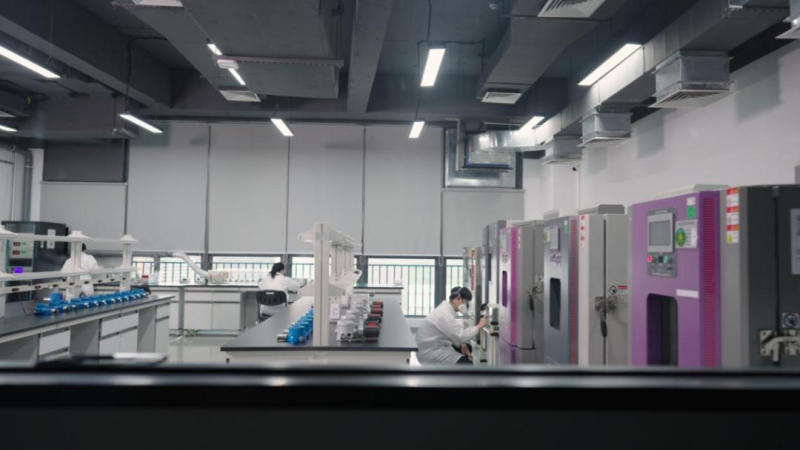
Quality Verification and Certification
As safety-critical devices, gas detectors must pass a series of environmental and reliability tests before leaving the factory, including high-low temperature cycling, damp heat aging, vibration and shock, drop, ESD (electrostatic discharge), and EMC (electromagnetic compatibility) testing.
For applications involving flammable or explosive gases, or underground tunnel environments, products must also obtain explosion-proof electrical certifications such as China’s CCC, and international ATEX and IECEx certifications. These certifications impose stringent requirements on structural integrity, electrical parameters, temperature rise limits, and material flame resistance.
At the functional safety level, some products are evaluated against IEC 61508 / SIL standards to ensure they can still deliver a valid alarm or enter a safe state under a single fault condition.
Ultimately, differences in manufacturing processes manifest themselves in the product’s long-term sensitivity, drift, zero stability, and anti-interference capability—these very metrics form the core dimensions for assessing gas detector reliability.
Manufacturing in Practice: Nuoan Technology’s Production Line
Building on the manufacturing processes described above, the gas detector industry is undergoing a broad transition from discrete manufacturing to intelligent, digitalized production. Nuoan Technology has conducted a systematic exploration in this direction: its facility has been recognized as an “Advanced-Level Smart Factory for Gas Sensors and Gas Detection & Analysis Instruments” and selected for the first batch of “Shenzhen Advanced-Level Smart Factories” in 2026. Its experience offers valuable insights into the intelligent, consistent delivery of modern gas detectors.
A Complete Compliance and Quality System
The gas detectors manufactured by Noah Intelligence serve both domestic and international markets, backed by a comprehensive compliance framework covering management systems and product certifications:
At the management system level, the company has obtained ISO 9001 (quality management), ISO 14001 (environmental management), and ISO 45001:2018 (occupational health and safety) certifications. In terms of product compliance, it has secured China’s explosion-proof certification, CCC, and CPA (pattern approval for measuring instruments), as well as international ATEX and IECEx certifications for hazardous areas. For functional safety and electromagnetic compatibility, its products meet SIL (Safety Integrity Level) requirements and the CE-EMC Directive. For the Eurasian Economic Union market, EAC certification has been obtained—covering market access requirements across major industrial countries and regions.
End-to-End Digital Process Control
With the MES (Manufacturing Execution System) as its backbone, the production line integrates all critical processes—from raw material incoming inspection, SMT placement, sensor assembly, and device sealing to gas calibration and final aging tests—into a unified digital platform. Each unit is assigned a unique serial number, enabling two-way traceability from raw material batches to factory test reports.
Intelligent Upgrades at Critical Process Steps
At the gas calibration stage, automated calibration stations equipped with multi-channel standard gas circuits can simultaneously write zero-point and multi-point response data in a single operation. For visual and seal inspection, machine vision systems have been introduced to automatically verify key stations such as display modules, buttons, and gasket assembly—replacing the traditional manual visual sampling approach.
For infrared sensors, the encapsulation process employs automated liquid filling (electrolyte injection) and in-line airtightness testing, further reducing batch-to-batch variation caused by manual handling.
Closed-Loop Feedback from Process Data
Key process parameters for each batch—such as reflow soldering temperature profiles, calibration response times, and device aging curves—are automatically collected and uploaded to the analytics system for statistical process control (SPC) analysis and process iteration, giving the production line the capability of continuous self-correction.
The essence of smart manufacturing lies in transforming process expertise into quantifiable, traceable, and iterable data assets—this is also the key pathway to achieving batch-to-batch consistency in modern gas detector production.
Taken as a whole, gas detector manufacturing represents an industrial chain characterized by multi-disciplinary integration and multi-process coordination. From the synthesis of sensitive materials and microfabrication of electrode structures to circuit integration, final assembly, and gas calibration, the process capability of every stage is ultimately reflected in the stability and reliability of the finished product.
For end users, understanding the manufacturing process helps better assess a product’s performance boundaries during selection and application. For R&D teams, process details on the manufacturing floor often serve as the true starting point for product iteration and differentiation. And for manufacturers, intelligent upgrades are reshaping the core competitiveness of this entire industrial chain.