














The refinery — the beating heart of modern industrial civilization.
Here, crude oil is fractionated, cracked, and reformed, transformed into gasoline, aviation kerosene, liquefied petroleum gas… Behind every energy product lies a complex web of chemical reactions. The gases produced during refining — some floating through the air, colorless and odorless; others settling silently into hidden corners — become the refinery’s most insidious and lethal safety hazard: the threat you never see coming.
A single gas leak can escalate into irreversible catastrophe within minutes.
Data from the Ministry of Emergency Management reveals that fires, explosions, and poisoning incidents triggered by gas leaks account for a substantial share of total industrial safety accidents in the petrochemical sector each year. How can gas detection systems serve as reliable sentinels along the refinery’s defensive perimeter? NOVOSENSE takes you inside to find out.
1.Where Are the Typical Gas Leak Risk Scenarios in Petroleum Refining?
Atmospheric and Vacuum Distillation Units
Crude oil is heated to high temperatures in furnaces, then separated into various fractions through distillation columns. At connection points such as heat exchangers, pipe flanges, and valve packings, light hydrocarbon gases (methane, ethane, propane, etc.) are highly prone to leakage. Upon contact with an open flame or static electricity, flash explosions can occur instantaneously.
Fluid Catalytic Cracking (FCC) Units
The FCC unit is one of the refinery’s most critical secondary processing units. High-temperature, high-pressure operations between the reactor and regenerator generate substantial volumes of combustible and sulfur-containing gases. Hydrogen sulfide (H₂S) is particularly prominent at this stage — concentrations in the dry gas produced by catalytic cracking can reach several thousand ppm.
Hydrotreating and Hydrocracking Units
Hydrogen units operate under high-pressure hydrogen environments, where hydrogen itself is exceptionally susceptible to leakage. Simultaneously, sulfur and nitrogen compounds in the feedstock are converted to toxic gases such as H₂S and NH₃ during hydrogenation reactions. Inadequate detection can lead to catastrophic consequences.
Wastewater Treatment and Sour Water Stripping Units
Sour wastewater contains dissolved H₂S and NH₃ in significant quantities. During the stripping process, these gases are released in large volumes. Areas surrounding sewage ponds, oil separators, and equalization basins are frequent hotspots for H₂S poisoning incidents.
Tank Farms and Loading/Unloading Operations
Large floating-roof tanks continuously “exhale” hydrocarbon gases during breathing, filling, and emptying cycles. During tanker loading and unloading operations, substantial volumes of oil vapors volatilize, forming explosive mixtures. Combined with frequent personnel movement in these areas, the risk of toxic inhalation or fire ignition is significantly elevated.
2.Three Major Categories of Gas Threats in Refineries
Combustible & Explosive Gases
Methane (CH₄), ethane, propane, butane, and other light hydrocarbons; hydrogen (H₂) — with an extremely wide explosive range of 4% vol to 75% vol and remarkably low ignition energy; liquefied petroleum gas (LPG) components.
Toxic & Hazardous Gases
– Hydrogen Sulfide (H₂S):The most dangerous refining byproduct. Olfactory threshold is approximately 0.005 ppm, yet high concentrations rapidly paralyze the sense of smell. Acute poisoning occurs at 100 ppm; concentrations exceeding 700 ppm can be fatal within minutes.
– Carbon Monoxide (CO):A product of incomplete combustion in heaters — colorless, odorless, and exceptionally difficult to detect.
– Sulfur Dioxide (SO₂):Present in substantial quantities at sulfur recovery units and combustion exhaust streams; strongly irritating to the respiratory tract.
– Ammonia (NH₃): Generated during hydrotreating and sour water stripping operations; lethal at high concentrations.
Asphyxiant Gases
– Nitrogen (N₂): Used extensively for pipeline purging and equipment inerting; can cause oxygen-deficient asphyxiation in confined spaces.
– Carbon Dioxide (CO₂): Accumulates at tank bottoms and in low-lying areas, creating oxygen-depleted environments.
3.Building a Refinery Gas Detection & Protection System
Given the complex gas risks outlined above, the industry widely adopts a “dual-safeguard” strategy combining fixed gas detectors with portable gas detectors.
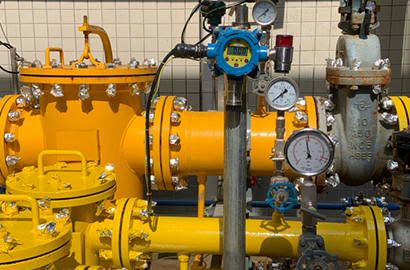
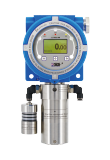
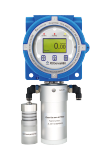
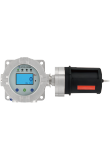
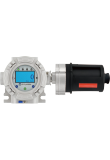
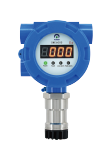
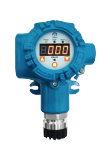
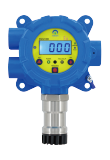
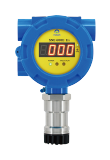
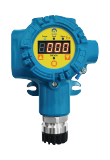
Fixed Gas Detectors — The “Permanent Sentinel” of Process Areas
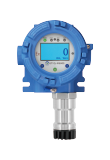
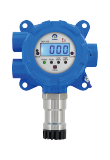
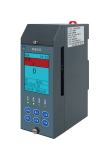
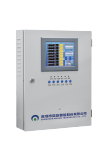
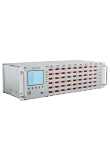
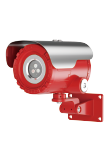
Fixed detectors are installed at critical locations throughout process units, providing 24/7 continuous monitoring. They form the backbone of any plant-wide safety monitoring system.
Key advantages include:
– Real-time integration with DCS control systems, audible/visual alarms, and emergency shutdown valves, enabling second-level response;
– Comprehensive coverage of the entire process area through strategic placement, eliminating blind spots;
– Historical data availability for incident analysis and regulatory compliance auditing.
Installation Essentials
– Clearance between the detector installation point and adjacent process piping or equipment shall be no less than 0.5 m.
– When detecting combustible or toxic gases heavier than air, the detector should be mounted 0.3 m to 0.6 m above the floor (or deck); for gases slightly heavier than air, position 0.5 m to 1.0 m below the release source. For combustible or toxic gases lighter than air, the detector should be within 2.0 m above the release source (or 0.5 m to 1.0 m above for gases slightly lighter than air).
– Ambient oxygen detectors should be installed 1.5 m to 2.0 m above the floor or deck.
– H₂S is heavier than air; detectors should be positioned in low-lying areas near potential leak points, approximately 0.3 m above ground level.
「Data Source」:GB/T 50493-2019《Standard for design of combustible gas and toxic gas detection and alarm for petrochemical industry》
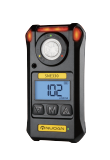
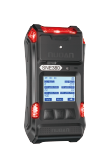
Portable Gas Detectors — The “Personal Guardian” for Personnel Operations
Before undertaking high-risk operations such as routine inspections, hot work, or entry into confined spaces (restricted areas), portable instruments are indispensable personal protective equipment.
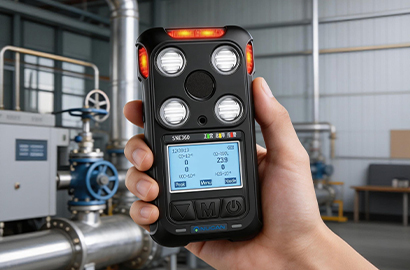
Multi-gas detectors can simultaneously monitor combustible gases, O₂, CO, H₂S, and other parameters. Their flexibility and mobility allow them to be carried directly into work zones for pinpoint detection at suspected leak points.
Usage Protocols
Instrument self-checks must be performed prior to each operation to verify normal sensor response.
When carried, the unit should be worn at chest level within the breathing zone, ensuring the sampling inlet faces outward.
In explosive gas atmospheres, only instruments certified for explosion protection (Ex-certified) may be used.