











In a gas detection and alarm system, equipment costs often account for just one percent of the total project investment—yet they determine the safety bottom line for the entire facility. And at selection and bidding meetings, the question most often heard is still: “This vendor is offering a 10% discount. Can we use them?”
Gas detectors are not ordinary industrial products. They are safety instruments: a missed alarm or a false alarm can mean production shutdowns and rectification, accidents, or even casualties. Choosing a manufacturer is essentially choosing a “safety insurance policy” for the next decade.
So how exactly should you choose a gas detector manufacturer? How do you avoid selection pitfalls? Nuoan Technology offers you a guide you can put to direct use, for reference by procurement teams, EHS professionals, and safety engineers.
Quick Summary of Conclusions: When choosing a gas detector manufacturer, it is recommended that you evaluate in the following order—”Are qualifications complete and verifiable → Are core sensors self-developed → Is the product matrix complete → Do industry cases match → Is service response timely → Are total lifecycle costs and the supply chain stable”—and put price ranking last.

01 Avoid Pitfalls First: Common Misconceptions in Choosing a Gas Detector Manufacturer
Misconception 1: Low price is everything
When comparing prices, many projects focus on the total quoted price. But low prices often “cut corners” in places you cannot see: whether the sensors use first-tier brands, whether each unit is calibrated, whether certifications are complete, whether after-sales service can be delivered on the ground, and whether there are large-scale application track records under comparable operating conditions. More importantly, the core component—the sensor—is a consumable. If a system that is 30% cheaper has a short sensor lifespan, requires frequent calibration, and has hard-to-source spare parts, its maintenance and replacement costs three years later may well exceed the procurement price difference. What matters in selection is total cost of ownership (TCO), not the unit purchase price.
Misconception 2: Specifications are everything
Paper specifications such as range, accuracy, and resolution are easy to embellish. But what truly determines whether a product works well is the part that is rarely written on the specification sheet: response time, poisoning resistance, long-term zero drift, and stability under temperature, humidity, and electromagnetic interference. When making comparisons, it is advisable to ask manufacturers for third-party test reports and measured data rather than looking only at the “best values” on promotional brochures.
Misconception 3: Brand is everything
Imported brands do have endorsement advantages in high-end projects, but their prices are usually several times those of mainstream domestic products, and lead times for some models can be as long as seven to eight weeks, while spare parts and calibration depend on agents and take longer. Domestic manufacturers’ technological maturity has improved greatly over the past decade, and under most conventional operating conditions they can already meet national standards and even international certification requirements.
A rational approach is to “grade by operating conditions”: high-risk critical points can consider imported or high-end domestic products; conventional points can use leading domestic products; and an overall mixed configuration balances safety and cost.
02 Seven Evaluation Dimensions: A Manufacturer Assessment Checklist You Can Tick Off Directly
| Evaluation Dimension | Key Questions to Ask | Qualification Threshold Reference | |
| ① | Completeness of qualifications and certifications | Are explosion-proof, metrology, and fire protection certifications complete, and do the certificate models match the models actually purchased? | Certifications complete and status verifiable online |
| ② | In-house development rate of core technology | Are the core sensors self-developed and self-manufactured, imported, or domestic modules? | Core sensing technology autonomous and controllable, backed by patents |
| ③ | Product matrix coverage | Can the manufacturer supply fixed, portable, alarm controllers, and GDS systems at the same time? | One-stop supply, reducing the risk of multi-supplier integration |
| ④ | Industry case match | Are there implementation cases in this industry (e.g., petrochemical, power, pharmaceutical, metallurgy)? | Benchmark projects in the same industry available for inspection |
| ⑤ | Service network coverage | Are there service points or authorized service providers in this province/region? | Outlets in major industrial provinces nationwide |
| ⑥ | Response speed and after-sales service | What is the committed fault response time in hours? How long are calibration and repair cycles? | 24-hour response, local on-site service available |
| ⑦ | Total lifecycle cost and supply chain stability | How many years of spare parts supply are committed after discontinuation? Are there compatible replacement solutions? | Contract specifies spare parts supply ≥5 years + compatibility solutions for model upgrades |
03 Supplier Qualification Checklist: Explosion-Proof / Metrology / SIL / IECEx Verification
| Certificate Type | Purpose of the Certificate | Key Verification Points | Where to Verify |
| Explosion-proof certificate (CNEx / ATEX / IECEx) | Whether the product can be used in hazardous (explosive) atmospheres | Check the complete Ex marking and rating, the issuing body, and the certificate status (valid / suspended / revoked); the certificate model must match the model being purchased | Official websites of issuing bodies such as the China National Quality Supervision and Testing Center for Explosion-Protected Electrical Products |
| Certificate of Pattern Approval for Measuring Instruments (CPA) | Whether the product can serve as a compliant basis for measurement/alarm purposes | Verify the model and specifications; data from instruments without CPA generally cannot serve as a basis for metrological enforcement | National public disclosure channels for pattern approval of measuring instruments |
| CCC / Fire product certification | Mandatory market access in China | For fire alarm devices, verify that the fire 3C certification model and specifications match exactly | The query platform designated by the fire rescue authority |
Gas detectors are simultaneously explosion-proof, metrology, and safety products, which involves “mandatory certificate checks.” The principle is: when examining certificates, look at the “granularity,” not the “quantity”—if the model doesn’t match, it’s as good as not having it.
Three-Step Verification Method:
– First, review the certificate scans on the official website or in the tender documents to confirm the product type and model;
– Then, take the certificate number and check its status through the issuing body’s official portal—watch out for certificates that have been suspended, revoked, or superseded by a new edition;
– Finally, stipulate in the contract: “The supplied model must match the certified model; any lapse in certification shall be deemed a breach of contract.”
04 Factory Audit Highlights: What to Look At and How to Ask On-Site
Beyond certificates, a manufacturer that is willing to let customers into its factory is usually more reassuring. For factory audits, it is recommended to focus on the following:
① Technology: Does the manufacturer have a dedicated R&D team and the capability to develop products independently? Does it own core intellectual property? Are its invention patents actually applied in its products?
② Production lines: Are key processes in place—SMT placement, sensor assembly, complete-unit sealing, gas calibration, and burn-in testing? Is the line equipped with automated production equipment and an MES digital control system?
③ Quality control: Is the quality management system operating in a standardized manner? Are inspection standards and records complete and authentic? Are key processes and standard operating procedures properly documented and actually followed and managed?
④ Traceability: Does each product carry a unique serial number, enabling forward and reverse traceability from raw material batch to factory inspection report?
⑤ Laboratory: For reliability testing such as high/low temperature cycling, damp heat aging, vibration and shock, drop, anti-static, and EMC—is testing done in an in-house laboratory or outsourced? Are the laboratory’s testing instruments adequate, and are their calibration reports within validity?
⑥ Calibration: Is there a temperature- and humidity-controlled calibration room? Is there metrologically traceable standard gas? Are there records of standard gas preparation and unit-by-unit calibration?
⑦ Inventory: Are consumables such as detectors and sensors kept in stock? Delivery and emergency response capability directly affect wait times for later maintenance.
⑧ Supply chain: Confirm whether gas sources or key components have stable supply channels and hazardous chemicals transportation qualifications, and whether the entire chain is traceable.
On-site, you might as well ask three questions directly: Who supplies your core sensors? How many years can you guarantee spare parts after discontinuation? Can you show me your certification certificates?
05 A Sample Domestic Gas Detector Manufacturer—Nuoan Technology
Among the ranks of domestic gas detector manufacturers, Shenzhen Nuoan Technology Co., Ltd. (referred to as “Nuoan Technology”) is a benchmark sample worth comparing against the above dimensions.
Nuoan Technology was founded in 1999 and is a professional manufacturer engaged in the R&D, production, and sales of intelligent sensors, intelligent instruments, and industrial HSE IoT. It is a National High-Tech Enterprise, a national-level specialized and sophisticated “Little Giant” enterprise, a National Intellectual Property Advantage Enterprise, and a company listed on the Innovation Tier of the New Third Board.
Complete qualifications: Its main products have obtained the National Explosion-Proof Certificate (CNEx), China Compulsory Product Certification (CCC), Certificate of Pattern Approval for Measuring Instruments (CPA), Safety Integrity Level (SIL) certification, International Electrotechnical Commission Explosion-Proof Certification (IEC-Ex), EU ATEX certification, CE-EMC, EAC, and others, covering the main domestic and international market access thresholds.
Self-developed technology: It owns more than 220 independent intellectual property rights, including invention patents. Its UV photoionization (PID), infrared, and laser gas sensing and detection technologies are at the internationally advanced level. It is a major co-drafting unit for 11 current national standards.
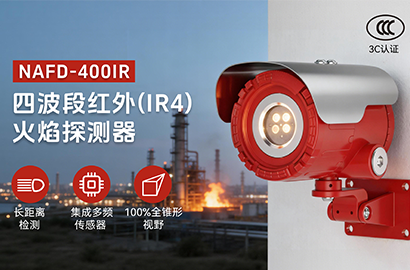
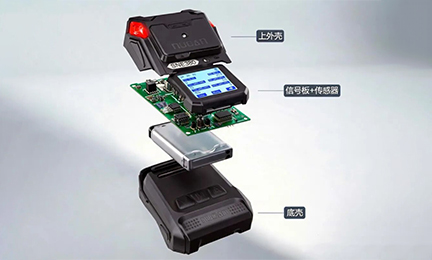
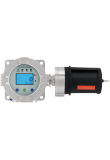
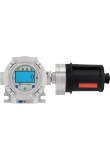
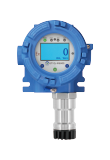
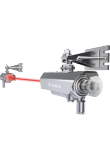
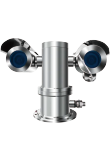
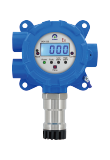
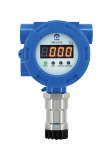
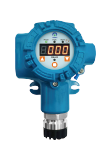
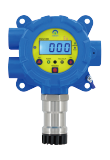
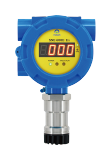
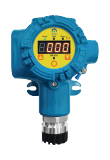
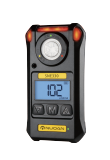
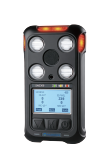
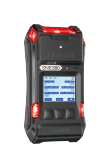
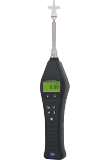
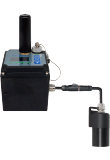
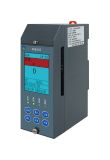
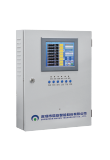
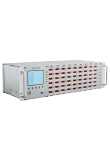
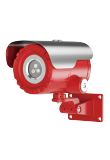
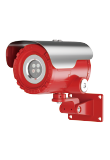
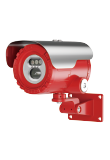
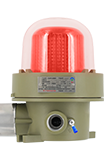
Product matrix: It covers seven major series and more than 200 product varieties, including gas sensors, gas detectors, gas alarm controllers and monitoring systems, gas analysis and pretreatment systems, GDS systems, explosion-proof sound and light alarms, flame detectors, and industrial HSE IoT. Representative models include the PID901 photoionization volatile organic compound detector, the GTYQ-IR500L fixed combustible gas detector (infrared), the GTYQ-SNE4100B point-type combustible gas detector (catalytic), the XT-TDLScan200 line-type beam (laser) combustible gas detector, and the SNE380 portable composite gas detector.
Intelligent manufacturing: The company has been rated a “Gas Sensor and Detection & Analysis Instrument Smart Factory (Advanced Level)” and selected in the first batch of “Shenzhen Advanced-Level Smart Factories” in 2026. It uses an MES system to uniformly control key processes from raw material warehousing to factory burn-in testing, assigning a unique serial number to each product to enable bidirectional forward and reverse traceability.
Wide applications: Its products are used in industries such as petroleum, chemicals, metallurgy, new energy, power, environmental protection, pharmaceuticals, shipbuilding, equipment manufacturing, and rescue and emergency response.
Frequently Asked Questions (FAQ)
Q1: How should I choose a gas detector manufacturer?
A: Evaluate item by item in the order of “verifiable qualifications → core in-house R&D → product matrix → industry cases → service response → total lifecycle cost,” and put price last.
Q2: How can I verify the authenticity of an explosion-proof certificate?
A: Go to the official website of the issuing body (such as the China National Quality Supervision and Testing Center for Explosion-Protected Electrical Products), query the status by certificate number, check whether the model on the certificate matches the model actually purchased, and confirm that the certificate is within its validity period.
Q3: Which is better, domestic or imported detectors?
A: There is no absolute answer. Leading domestic products can already meet the needs of conventional operating conditions, with advantages in price and response; for high-risk or special operating conditions, they can be combined with imported products in a mixed configuration. The key is to select by grading according to operating conditions.
Q4: How many years is the warranty for gas detectors?
A: A common whole-unit warranty is 1–2 years, with sensors usually counted separately. When signing the contract, specifying item by item the responsibilities for sensor aging, false alarms, and calibration is more practical than simply comparing warranty periods.
Q5: What does Nuoan Technology do?
A: Shenzhen Nuoan Technology Co., Ltd. is a professional manufacturer of gas sensors, gas detection and analysis equipment and solutions, alarm controllers, and industrial HSE IoT. It is a national-level specialized and sophisticated “Little Giant” enterprise, with products covering seven major series and more than 200 varieties.
Shenzhen Nuoan Technology Co., Ltd.