















On February 24, 2026, a deafening explosion rocked Colton, California, when a hydrogen transport trailer detonated during maintenance, killing one person, severely injuring another, and forcing over 60% of local hydrogen refueling stations to shut down. This was no isolated incident — according to incomplete statistics, the first quarter of 2025 alone saw seven major hydrogen-related accidents worldwide, spanning the entire value chain from production and storage to transportation and refueling.
The hydrogen industry is expanding at an unprecedented pace. The *2026 Global Hydrogen Industry Development Report*, released on June 26, shows that China ranks first globally in both hydrogen production and consumption, with green ammonia and green methanol capacity growth leading the world. Yet behind this industrial “acceleration,” safety protection must not fall behind.
Hydrogen, the lightest chemical element, is becoming a cornerstone of the global energy transition thanks to its pollution-free nature. But its risks are equally “unbearably light”: it is highly flammable, with a minimum ignition energy of just 0.019 mJ in air and 0.007 mJ in oxygen — less than one-tenth that of gasoline. Its explosive limits span an extraordinarily wide range of 4% to 75%. It is colorless, odorless, and undetectable by human senses. It poses explosion hazards when mixed with fluorine, chlorine, oxygen, carbon monoxide, or even air itself. Kingston University in the UK analyzed 676 hydrogen incidents, finding that 62% ultimately escalated into fires or explosions.
Leak detection and over-limit early warning constitute the first line of defense for safety in hydrogen-involved facilities.
Four Major Hydrogen Detection Technologies: How to Choose the Right One?
Hydrogen detection is not just about deploying a single detector. Different scenarios demand different technical principles. The current mainstream industrial-grade hydrogen detection technologies include:
Catalytic Combustion (Catalytic Bead) — Ideal for Lower Explosive Limit (LEL) concentration safety warnings. Low cost, fast response (<15 seconds). However, sensors are vulnerable to poisoning by sulfur compounds and have a relatively short service life. Suitable for routine flammable concentration monitoring at hydrogen refueling stations, gas pipelines, and similar applications.
Electrochemical — Extremely high sensitivity for trace detection. Ideal for micro-leakage early warning in laboratories and fuel cell R&D. Caution is required regarding sensor failure risks caused by interfering gases such as H₂S.
Thermal Conductivity— Leverages the physical property that hydrogen’s thermal conductivity is 7.15 times that of air. Suitable for industrial hydrogen purity detection and high-purity hydrogen analysis in the semiconductor industry. Covers a concentration range of 0–100%. Low cost, but sensitive to changes in background gas composition.
Selection Recommendations: For routine flammable concentration early warning, catalytic combustion is recommended. For laboratory micro-leakage detection, electrochemical is suitable. For high-purity hydrogen analysis, thermal conductivity is recommended. For complex multi-scenario operations, a multi-technology combined solution is advised.
GB 12358-2024 Now in Effect: Is Your Alarm Still Compliant?
On June 1, 2025, GB 12358-2024 *General Technical Requirements for Gas Detection and Alarm Instruments for Workplace Environments* officially came into force, fully replacing the 2006 edition that had been in effect for nearly two decades.
Compared with the old version, the new standard has at least three direct impacts on hydrogen-involved enterprises:
First, response time halved.The response time for pump-aspirated flammable gas alarms has been compressed from 60 seconds to ≤30 seconds. Hydrogen diffuses approximately three times faster than natural gas. Thirty seconds is enough for leaked gas to disperse over a considerable distance. Every second of improvement in response speed is a matter of life and death for on-site personnel.
Second, upgraded accuracy benchmarks. The reference for flammable gas indication error has shifted from “displayed value” to “standard value.” Oxygen error has been tightened from ±5% to ±2%. This means equipment that was “qualified” under the old standard may no longer meet requirements under the new one.
Third, mandatory intelligence requirements. New fault self-diagnosis and 90-day log storage functions are now required. For fixed detectors in hazardous chemicals and hazard source scenarios, SIL functional safety compliance is also mandatory. The routine calibration interval for portable devices has been compressed from 6 months to ≤3 months.
Enterprises currently using hydrogen detection alarms are advised to conduct compliance audits against the new standard as soon as possible.
Hydrogen-Involved Scenario Protection Strategies vs. SNE Intelligent Solutions
Based on accident data from recent years, hydrogen-related safety risks are concentrated in three major scenarios:
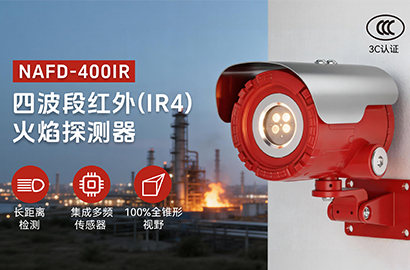
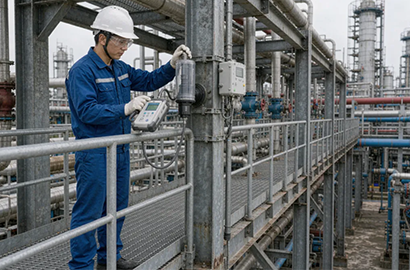
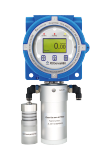
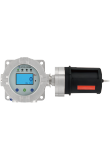
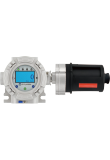
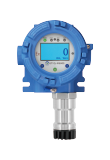
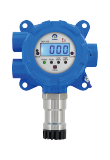
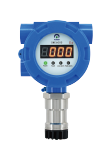
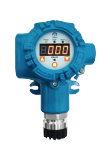
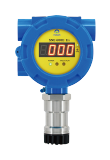
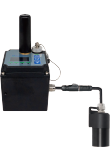
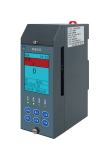
Hydrogen Production / Chemical Plant Areas: Fixed flammable gas detectors are recommended, deployed at valves, flanges, and other leak-prone points. For example, the SNE Intelligent GTYQ-SNE600C flammable gas detector (catalytic combustion principle, plug-in intelligent sensor, multi-wire connection, seamless DCS/PLC integration) enables multi-point protection.
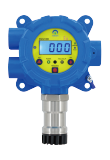
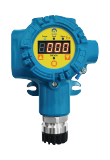
Hydrogen Storage, Transport, and Refueling Stations: The key lies in rapid response and explosion protection ratings. Catalytic combustion detectors (response ≤15 seconds) must be installed around hydrogen dispensers, compressors, and hydrogen storage cylinder groups. The SNE Intelligent GTYQ-SNE4100B plug-in flammable gas detector allows sensor replacement without shutdown, improving maintenance efficiency by over 60% — especially suitable for high-turnover scenarios like refueling stations.
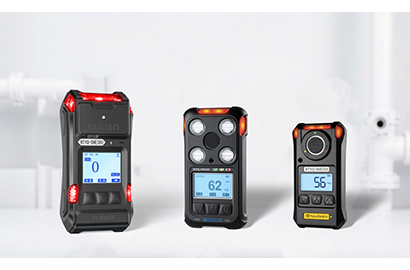
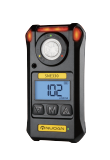
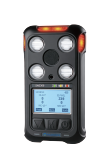
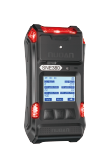
Laboratories / Test Rigs:Portable multi-gas detectors are recommended, combining dual functions of low-concentration early warning (electrochemical, ppm level) and high-concentration alarm (catalytic combustion, %LEL level). The SNE SNE380 portable multi-gas detector can simultaneously detect six gases, supporting hydrogen + oxygen + toxic gas combination configurations — ideal for researchers to carry on-site.
Conclusion
The hydrogen energy industry is transitioning from “policy-driven” to “market-driven,” and from “demonstration applications” to “large-scale expansion.” In this green energy revolution, safety is not a cost — it is a baseline competitive advantage. A properly selected, compliant hydrogen detection and alarm system may cost less than one-thousandth of total production line investment. Yet once a leakage accident occurs — casualties, production shutdowns, regulatory penalties, and the collapse of brand trust — the cost exceeds ten thousand times over.