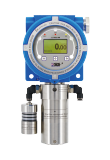
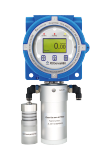


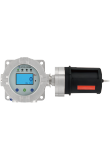
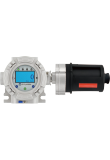


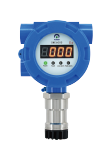
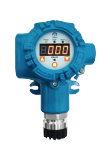
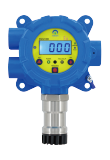
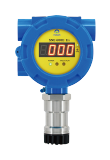


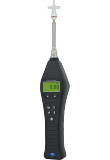

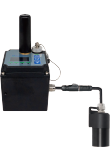


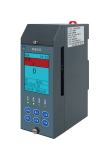
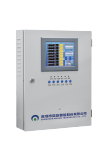





An LNG receiving terminal is an energy hub where liquefied natural gas transported by sea is offloaded, stored, and regasified for pipeline distribution. The primary hazardous substance on site is methane, which can trigger an explosion when ignited after a leak (explosive limits: approximately 5% VOL–15% VOL). This article examines the key aspects of gas detection at LNG terminals and the mainstream technical approaches from three perspectives: operational requirements, detection blind spots, and regulatory compliance.

1 Why Is Gas Detection Indispensable at LNG Terminals?
LNG is stored as a liquid at approximately –162°C under atmospheric pressure. It is transferred from carrier vessels into onshore storage tanks via unloading arms, then vaporized and pressurized for pipeline distribution. The vapor generated during this process is known as Boil-Off Gas (BOG), which remains predominantly methane.
Two inherent properties of methane define both the safety challenges and detection complexities faced by LNG terminals. First, it is highly flammable: when mixed with air, its Lower Explosive Limit (LEL) is approximately 5% VOL. Second, it is a “shape-shifter” in terms of density—cryogenic LNG vapor is heavier than air and tends to spread along the ground, whereas regasified methane at ambient temperature is lighter than air and rises. This temperature-dependent density inversion is precisely what determines whether detectors should be mounted high or low.
Furthermore, large volumes of nitrogen are used during loading, unloading, and inerting operations. A nitrogen leak can deplete oxygen levels in confined spaces, creating a serious asphyxiation hazard. Consequently, safety monitoring at LNG facilities must simultaneously address three distinct risks: flammable gas, toxic exposure, and oxygen deficiency.
2 Which “Blind Spots” Are Most Likely to Go Undetected?
In practice, several categories of detection blind spots persist:
Low-Temperature Zones: Tank wall valves and flanges operate in the vicinity of –162°C, where minute leaks can accumulate over time into a significant hazard. Meanwhile, conventional catalytic bead sensors suffer from degraded stability in extreme cold, leading to delayed response or even detector failure.
Open Areas: Tank farms, loading jetties, and pipe racks span vast distances. Once released, natural gas disperses unpredictably under the influence of wind direction, wind speed, and ambient temperature. Relying solely on point-type detectors installed one by one cannot achieve full coverage, resulting in monitoring delays—or outright missed alarms.
Low-Lying and Confined Spaces: Valve pits, cable trenches, bund corners, and tank manholes are all locations where gas can accumulate, and where personnel entry poses elevated risk.
Dynamic Leak Points: Swivel joints on unloading arms and Emergency Release Systems (ERS) are in constant motion during operations, making them high-frequency leak sources that are inherently difficult to monitor.
3 What Do Regulations and Standards Require?
Gas detection is not a case of “install it and forget it.” It is bound by explicit national standards and regulatory mandates. In recent years, Chinese authorities have placed increasingly stringent requirements on gas detection at LNG terminals and other oil & gas facilities:
GB/T 50493-2019 — Design Standard for Detection and Alarm of Combustible Gas and Toxic Gas in Petrochemical Industry: Effective January 1, 2020, this standard superseded the 2009 edition. It stipulates that the first-level alarm setpoint for combustible gas shall not exceed 25% of its Lower Explosive Limit (LEL), and the second-level alarm shall not exceed 50%. The detection and alarm system must be configured independently of other systems. Crucially, the standard states that for open, large-span areas, open-path (line-type) combustible gas detectors are preferred.
SY/T 6503-2022 — Safety Specification for Combustible Gas and Toxic Gas Detection and Alarm Systems in Oil and Natural Gas Engineering, issued by the National Energy Administration, further refines detection and alarm requirements for the oil and gas sector.
SY/T 7804-2024 — Online Inspection and Testing Methods for LNG Receiving Terminals, effective March 2025, details the methodologies for online inspection and testing at LNG terminals.
GB 12358-2024 — General Technical Requirements for Gas Detection and Alarm Instruments in Workplace Environments, a new national standard that further regulates the technical specifications of gas detection and alarm instruments.
The rapid evolution of this regulatory framework makes one thing clear: regulators are systematically raising the bar for coverage, sensitivity, and reliability of gas detection at LNG terminals.
4 How to Select the Right Technical Approach?
Different zones call for different detection principles. The typical configuration is as follows:
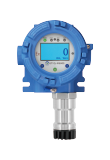
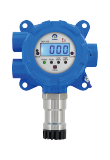
Point-Type Infrared (IR) Detectors: Ideal for BOG vapor spaces above tanks and for flange/valve assemblies. Immune to poisoning and offer a long service life.
Point-Type Catalytic Bead: Lower cost, suitable for conventional monitoring points; however, careful selection is required for low-temperature and high-humidity environments.
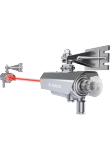
Open-Path Laser Methane Detectors (TDLAS): A single beam spans tens to hundreds of meters. Resistant to interference from water vapor and dust, these are particularly well-suited to large open areas such as tank farms, pipe racks, and loading zones—typically deployed as a complement to point-type detectors.
Oxygen (O₂) Detectors: Installed at confined space entrances, nitrogen stations, and similar locations to guard against oxygen deficiency and asphyxiation.
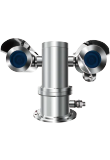
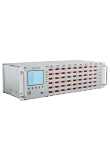
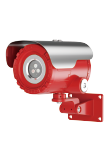
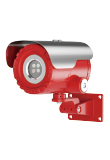
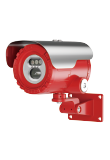
In practice, pan-tilt scanning laser gas monitoring systems achieve real-time, large-area methane monitoring through 360° pan-tilt rotation and long-range scanning. Open-path laser gas detectors are suited to open work areas, capable of detecting trace gas leaks across distances of up to several hundred meters.
Taking NUOAN Technology‘s open-path beam detector XT-TDLScan200 and its pan-tilt scanning laser monitoring system (based on TDLAS technology) as examples, this class of open-path equipment can operate reliably under complex conditions including heavy rain, dense fog, and extreme cold—representing one of the fastest-growing segments in the field. TDLAS technology leverages the selective absorption of specific laser wavelengths by gas molecules to measure concentration. It offers strong anti-interference capability, immunity to poisoning, rapid response, and high precision. With no zero-drift issues, its stability and reliability are significantly enhanced.
It should be noted that final equipment selection must be determined through a comprehensive assessment incorporating site-specific process conditions, hazardous area classification, and the design requirements of GB/T 50493.
5 Case Studies
At present, major LNG terminals across China have deployed gas detection systems in compliance with regulatory requirements. For instance, the Tianjin Nangang LNG Terminal has installed pan-tilt laser methane monitoring units across the entire facility. Using TDLAS technology, these systems perform 24/7 scanning of tank farms and process areas with detection precision at the ppm level. Meanwhile, the Shenzhen LNG Terminal has leveraged 5G + Industrial Internet applications to increase its risk perception rate by 70%.
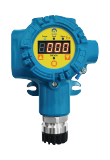
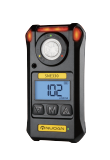
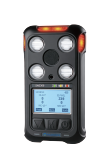
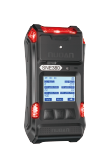
As a professional supplier in China’s gas detection sector, NUOAN Technology has supplied gas detection equipment for multiple LNG projects, including the Zheneng Wenzhou LNG Terminal. The company’s product portfolio covers point-type fixed detectors, open-path laser gas detectors, and pan-tilt scanning laser gas monitoring systems. All product lines have obtained the National Explosion-Protection Certificate (China Ex) and other requisite certifications, meeting the gas detection demands of diverse scenarios at LNG receiving terminals.
Safety at an LNG terminal is a monitoring network woven from points, lines, and planes: the integration of point detection and line scanning, the complementarity of fixed installations and mobile inspections, and the fusion of traditional technology with intelligent algorithms. Only by building a multi-technology, multi-tier, three-dimensional detection network can we truly seal every security gap. Yet equipment is but one line of defense; true inherent safety stems from a deep respect for regulatory baselines and an unwavering commitment to routine calibration and maintenance.
Today, as policies and standards grow ever more stringent and technological methods continue to evolve, safety management at LNG terminals is shifting from passive response to proactive prevention. And that is precisely the mission that every gas detection equipment manufacturer—and every single gas detection device—must uphold.